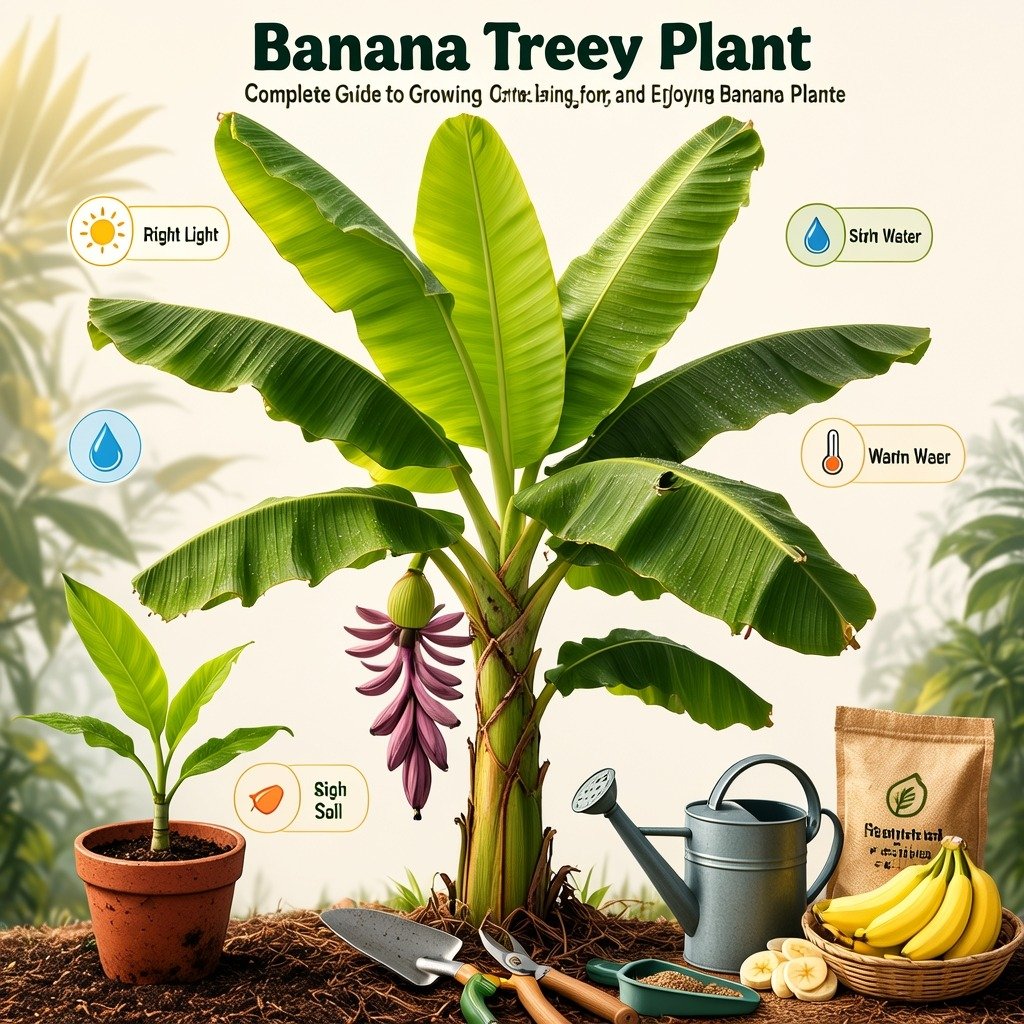
A banana tree plant can make any garden look fresh and tropical. Its huge green leaves create a beautiful view. With good care, the plant can also produce tasty bananas.
Many people call it a banana tree. However, it is not a true tree. It is actually a large herb. Its tall stem does not have the hard wood that normal trees have.
Still, a banana plant can grow very tall. Some types can reach several feet in height. Other types stay small and work well in pots.
Growing a banana tree plant can be fun for beginners. The plant mainly needs sunlight, water, warmth, good soil, and regular care.
In this guide, you will learn how to plant bananas, water them, feed them, protect them, and help them grow. You will also learn about common problems and simple solutions.
What Is a Banana Tree Plant?
A banana tree plant belongs to the Musa plant group. It grows best in warm places. Many types grow in tropical and subtropical regions.
The tall part looks like a tree trunk. However, it is called a pseudostem. It forms when many leaf bases grow tightly around each other.
Below the soil, the plant has a rhizome. New shoots can grow from this underground part. These young shoots are often called pups or suckers.
The leaves grow from the center of the plant. They can become very large. Because of this, even one plant can create a strong tropical look.
Why Are Banana Plants So Popular?
Banana plants are popular because they look beautiful. Their large leaves can quickly change the look of a garden.
Also, some varieties produce edible fruit. Home growers enjoy watching the plant grow from a small shoot into a large plant.
Another reason is fast growth. In warm conditions, banana plants can produce new leaves regularly.
However, growth depends on the climate. Soil, water, sunlight, and plant variety also make a big difference.
Choosing the Right Banana Tree Plant
Choosing the right variety is an important first step. Not every banana plant grows the same way.
Some varieties can become very tall. Others stay short and work better in containers.
Therefore, think about your garden before buying a plant. Measure the available space and check the expected size of the variety.
You should also check your local weather. Some banana plants handle cooler conditions better than others.
If your area gets cold winters, choose a suitable variety. This simple choice can make plant care much easier.
Where Should You Plant a Banana Tree Plant?
Location matters a lot. A banana tree plant needs a bright and warm place.
Choose an area that receives plenty of sunlight. Strong light helps the plant produce healthy leaves.
Also, choose a place with some protection from strong winds. Banana leaves are large and can tear easily.
A wall or fence can sometimes provide useful shelter. However, make sure the plant still gets enough sunlight and fresh air.
How Much Sun Does a Banana Tree Plant Need?
Banana plants love sunlight. Therefore, give your plant a bright location whenever possible.
Several hours of direct sunlight can support strong growth. More sunlight can also help fruiting varieties.
However, extremely hot conditions can stress young plants. Watch the leaves during very hot weather.
If the leaves look badly burned, provide suitable protection. Also, make sure the plant has enough water.
Best Soil for a Banana Tree Plant
Good soil gives a banana plant a strong start. The soil should hold moisture but also drain extra water.
Rich soil with organic matter can work well. Compost can help improve the soil structure.
Before planting, loosen the soil. Remove large stones, weeds, and other unwanted material.
Then dig a suitable planting hole. Give the roots enough space to spread naturally.
Why Drainage Matters
Banana plants like moisture. However, they do not like standing water around their roots.
Poor drainage can cause root problems. It can also make the plant weak.
Therefore, check your garden after heavy rain. If water stays around the plant for a long time, improve drainage.
You can improve the soil with suitable organic matter. Raised planting areas can also help in some gardens.
How to Plant a Banana Tree Plant
Start with a healthy plant. Look for green leaves and strong growth.
Next, choose a good planting location. Make sure it receives enough sunlight.
Dig a hole that gives the roots enough room. Place the plant at a suitable depth.
Then fill the hole with soil. Press the soil gently around the roots.
Finally, water the plant well. Keep checking the soil during the first few weeks.
Watering a Banana Tree Plant
Water is very important for banana plants. Their large leaves can lose water quickly.
During hot weather, the plant may need frequent watering. However, the exact amount depends on your soil and climate.
Check the soil before watering. If the top layer feels dry, the plant may need water.
Do not keep the roots soaked all the time. Good drainage should always remain part of your watering plan.
How Often Should You Water?
There is no perfect watering schedule for every garden. Weather changes from week to week.
During hot and dry periods, your plant may need more water. During rainy periods, it may need less.
Container plants often dry out faster. Therefore, check potted plants more often.
The best method is simple. Feel the soil and observe the plant.
Feeding a Banana Tree Plant
Banana plants can grow quickly. Therefore, they need a good supply of nutrients.
A suitable balanced fertilizer can support healthy growth. Some growers also use fertilizers with useful levels of potassium for fruiting plants.
However, do not use too much fertilizer. Extra fertilizer does not always mean extra growth.
Always follow the instructions on the fertilizer package. Also, consider your soil condition before adding large amounts.
Why Potassium Matters
Potassium is an important plant nutrient. It supports many normal plant functions.
Fruiting plants may have higher nutrient needs during certain growth stages.
However, every garden is different. Soil tests can provide better information about nutrient levels.
Therefore, avoid guessing when possible. Give your banana tree plant the nutrients it actually needs.
Growing Banana Plants in Containers
You do not need a large garden to grow bananas. Some smaller varieties can grow well in pots.
Choose a strong container. Large banana leaves can make the plant top-heavy.
The container must have drainage holes. This allows extra water to escape.
Also, use suitable potting soil. Avoid heavy soil that stays wet for long periods.
Choosing the Right Pot
A small plant can start in a smaller container. However, it may need a larger pot as it grows.
Choose a pot that gives the roots enough space. A heavy container can also provide better stability.
Make sure the bottom has drainage holes. Without them, water can collect around the roots.
You may need to repot the plant as it grows. Move it carefully to avoid damaging the roots.
Banana Tree Plant Growth Stages
A banana plant begins with a small shoot. It then develops new leaves.
As the plant grows, its pseudostem becomes taller and thicker.
Eventually, a mature plant may produce a flower. After flowering, some varieties develop banana fruit.
The process can take many months. Therefore, patience is important.
Good sunlight, water, warmth, and nutrition can support healthy growth.
How Fast Does a Banana Tree Plant Grow?
Banana plants can grow quickly in warm conditions. They may produce new leaves at a steady rate.
However, growth slows when temperatures fall. Poor sunlight can also slow the plant.
Water problems may create another issue. Too little water can cause stress, while too much water can harm roots.
Therefore, watch the whole plant. Healthy new leaves usually show that the plant is growing well.
When Does a Banana Tree Plant Produce Fruit?
Fruit production depends on the variety and growing conditions.
Some banana plants need many months before they flower. Others may take longer.
Once a flower appears, small fruits can begin developing.
Keep caring for the plant during this stage. Do not stop watering or feeding simply because fruit has appeared.
Understanding Banana Flowers
Banana flowers grow from the center of mature plants. The flower can become quite large.
Many banana varieties have colorful flower parts. Some may look purple, red, or dark brown.
After flowering, bananas can develop in clusters.
The exact appearance depends on the variety. Therefore, do not worry if your flower looks different from another banana plant.
Caring for Banana Fruit
Fruit needs continued care. Keep the soil evenly moist without creating standing water.
Strong wind can damage large leaves. It can also affect the plant’s support.
Therefore, choose a sheltered location whenever possible.
Also, check the fruit and leaves regularly. Early signs of pests or damage are easier to manage.
Banana Tree Plant Pups
Banana plants often produce pups around the main plant. These shoots can become new plants.
If too many pups grow together, the area can become crowded.
Crowding can reduce airflow and make the planting area difficult to manage.
Therefore, many growers keep a few strong pups and remove unwanted ones.
How to Propagate Banana Plants
Pups provide one simple way to propagate banana plants.
Choose a healthy pup that has developed enough size and roots.
Separate it carefully from the parent plant. Try to keep useful roots attached.
Then plant the pup in suitable soil. Water it and protect it while it becomes established.
Pruning Banana Plants
Banana plants do not need heavy pruning. However, damaged leaves can be removed.
Use clean cutting tools. Cut away leaves that are badly damaged or dead.
Do not remove healthy leaves without a reason. The plant uses its leaves to capture sunlight.
After fruiting, an old pseudostem may eventually die. New growth can then continue the plant’s cycle.
Protecting a Banana Tree Plant From Wind
Wind can damage banana plants. Their leaves are large and can tear easily.
Choose a protected location when possible. A building, wall, or suitable garden structure can reduce strong wind.
However, do not completely block airflow. Plants still need fresh air.
If your area has strong storms, provide extra support when needed.
Cold Weather and Banana Plants
Most banana plants prefer warmth. Cold temperatures can slow their growth.
Frost can cause serious damage to many varieties. Therefore, cold protection matters in cooler areas.
Container plants have one advantage. You may be able to move them into a protected area.
Garden plants may need mulch or other suitable protection. The right method depends on your variety and local climate.
Winter Care for Banana Plants
Winter care depends on where you live.
In warm regions, banana plants may continue growing during winter.
In cooler areas, leaves may become damaged. Growth may also slow down.
Remove badly damaged material when appropriate. Then protect the plant according to its variety and local weather.
Using Mulch Around Banana Plants
Mulch can help the soil hold moisture. It can also reduce weed growth.
Organic mulch can slowly add material to the soil as it breaks down.
However, avoid piling wet mulch directly against the pseudostem.
Spread mulch around the root area instead. Keep the plant base reasonably clear.
Common Banana Plant Pests
Banana plants can attract different pests. Aphids, mites, scale insects, and other insects may cause problems.
Check the leaves often. Look at both sides of the leaves.
Small insects can sometimes hide underneath leaves.
If you find pests, identify them first. Then choose a suitable treatment.
Avoid using random chemicals. Always follow product instructions and safety warnings.
Common Banana Plant Diseases
Banana plants can develop different diseases. Symptoms may include spots, yellow leaves, wilting, or poor growth.
However, these symptoms do not always mean disease.
Water problems can create similar symptoms. Nutrient shortages can also affect leaf color.
Therefore, look at the entire plant before choosing a treatment.
Why Are Banana Leaves Turning Yellow?
Yellow leaves can have many causes. Older leaves naturally become yellow as they age.
Too much water can also cause problems. Poor drainage may stress the roots.
On the other hand, too little water can stress the plant too.
Nutrient problems may also create yellow leaves. Check sunlight, soil moisture, drainage, and feeding before making changes.
Why Are Banana Leaves Turning Brown?
Brown edges can appear during hot or dry weather. Strong wind can also damage leaves.
Very dry indoor air may affect container plants.
Some leaf damage is normal. Large banana leaves can tear and develop brown sections.
Remove severely damaged leaves when needed. Then improve the growing conditions if you can identify the cause.
Growing a Banana Tree Plant Indoors
Some smaller banana varieties can grow indoors. However, they need plenty of light.
Place the plant near a bright window. A suitable grow light can help if natural light is limited.
Indoor plants may also need careful watering. Containers can dry out differently from garden soil.
Also, check the leaves for pests. Indoor plants can still attract insects.
Can You Grow a Banana Tree Plant From a Banana?
A normal supermarket banana usually cannot grow into the same type of plant by simply planting its fruit.
Many commercial bananas have little useful seed. Growers normally use other propagation methods.
Nursery plants and pups are more practical choices for home growers.
Therefore, buy a healthy plant or obtain a suitable pup when you want to start growing bananas.
Banana Plants in Garden Design
A banana tree plant can become a beautiful garden feature.
Its large leaves add height and texture. They can also create a tropical feeling.
You can grow banana plants near patios or other outdoor areas.
However, leave enough room around them. The leaves can spread widely, and new pups may appear around the base.
Can Banana Plants Provide Shade?
Banana leaves can provide some shade. However, they do not work like the branches of a large shade tree.
Their leaves can move and tear in the wind.
Still, several banana plants can create a pleasant green space.
They work especially well with other tropical-looking plants.
How to Keep a Banana Tree Plant Healthy
Healthy plants need basic care. Give your banana plant enough light and water.
Next, provide suitable soil. Good drainage is especially important.
Feed the plant when needed. Avoid excessive fertilizer.
Finally, check the leaves often. Early action can prevent small problems from becoming bigger ones.
Common Banana Plant Growing Mistakes
Beginners can make simple mistakes. Luckily, many are easy to avoid.
Here are some common problems:
- Giving too much water.
- Using soil with poor drainage.
- Keeping the plant in deep shade.
- Adding too much fertilizer.
- Ignoring pests.
- Planting in a very windy place.
- Choosing the wrong variety.
- Using a container without drainage holes.
- Crowding too many plants together.
- Removing healthy leaves without reason.
Avoiding these mistakes can make banana plant care much easier.
How Much Space Does a Banana Tree Plant Need?
Space depends on the variety. Large types need more room than dwarf varieties.
Remember that the leaves can spread far from the central stem.
Also, pups can appear around the main plant.
Therefore, do not plant bananas too close together. Give each plant enough room for healthy growth.
Best Time to Plant Banana Plants
Warm weather is usually better for planting bananas. The plant needs warmth to establish roots and produce new growth.
Avoid planting during very cold weather.
If you live in a warm region, you may have a longer planting season.
However, always consider your local climate. Weather conditions can change the best planting time.
Banana Tree Plant Care Checklist
Use this simple checklist to care for your plant:
- Choose a sunny location.
- Use rich, well-draining soil.
- Water when the soil needs it.
- Avoid standing water.
- Feed the plant properly.
- Watch for pests.
- Remove badly damaged leaves.
- Protect the plant from strong wind.
- Protect it from cold weather.
- Give pups enough space.
- Use suitable containers for potted plants.
- Check the plant regularly.
This simple routine can help your banana tree plant stay strong.
Benefits of Growing a Banana Tree Plant
Growing a banana plant offers several benefits.
First, it adds beauty to your garden. The large leaves create a tropical appearance.
Second, fruiting varieties may produce bananas. Fresh fruit can be rewarding after months of care.
Third, banana plants can grow quickly in good conditions.
Finally, caring for plants can be a fun activity for children and adults. It teaches patience and responsibility.
Five Small FAQs About Banana Tree Plant
1. Is a banana tree plant actually a tree?
No. A banana plant is a large herb. Its tall pseudostem looks like a tree trunk, but it does not contain normal woody growth.
2. How much sunlight does a banana tree plant need?
Banana plants generally prefer a bright, sunny location. Good sunlight supports healthy growth and can help fruiting varieties.
3. How often should I water a banana tree plant?
Water when the soil begins to dry. Hot and dry weather can increase water needs. However, avoid keeping the roots in standing water.
4. Can I grow a banana tree plant in a pot?
Yes. Smaller banana varieties can grow in containers. Choose a large pot with drainage holes and provide plenty of sunlight.
5. Why are the leaves on my banana plant turning yellow?
Yellow leaves can come from normal aging, water problems, nutrient issues, pests, or stress. Check the plant’s overall conditions before choosing a solution.
Conclusion
A banana tree plant can be a wonderful addition to a garden. Its large leaves bring a tropical feeling, while fruiting varieties can provide tasty bananas.
However, the plant needs regular care. Give it sunlight, suitable soil, enough water, and proper nutrition.
Good drainage also matters. At the same time, protect the plant from strong wind and cold weather when needed.
Remember that every banana variety grows differently. Some become very tall, while others stay small.
Therefore, choose a variety that fits your garden and climate. Then give it the right conditions.
With patience and simple care, your banana tree plant can grow into a healthy and attractive garden feature. Even if fruit takes time, the plant’s beautiful leaves can make the effort worthwhile.